
My Blog
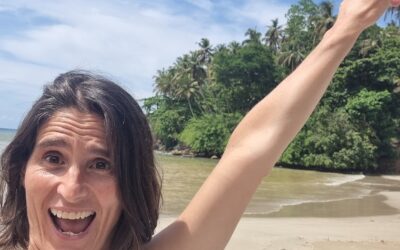
The Boredom Breakthrough: Why “Rest” Isn’t Enough for Healing
Five weeks post-injury, I hit a strange wall. The agonizing pain has settled, but the motor deficit—my “gammy leg”—remains. I’ve embraced the slow life: the naps, the bird-spotting, and the journaling. But in the quiet of Unakuruwa, I realized something startling: I was bored. I realized that fun isn’t the reward for healing; it’s a requirement for it. This week, I traded the meditation cushion for a boogie board and found a different kind of medicine in Hiriketiya.
The Pendulum Swing: Finding Safety When the Expert Brain Fails
Healing isn’t a steady climb; it’s a pendulum. This week, I swung between the deep, restorative joy of Unakuruwa and the sharp, cold panic of the “Physio Brain.” But I discovered something profound: you cannot always be your own anchor. This is the story of how a single phone call with a neurosurgeon provided the “Safety In Me” (SIM) that I couldn’t manufacture on my own.
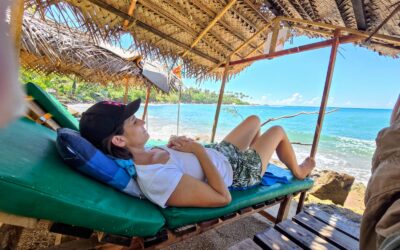
The Art of the Pivot: From Friction to Flow in Unakuruwa
Healing is rarely a straight line; it is a series of adjustments. After a week of navigating the noise and physical “friction” of Weligama, I realized that my environment was working against my nervous system. By making the radical choice to pivot—abandoning our plans for a surf-centric stay in Ahangama for the secluded sanctuary of Unakuruwa—I finally found the “Flow” state my body was craving. This is about the power of choosing ease, the reality of weaning off nerve medication, and the tears that come when the “Expert” finally lets go.
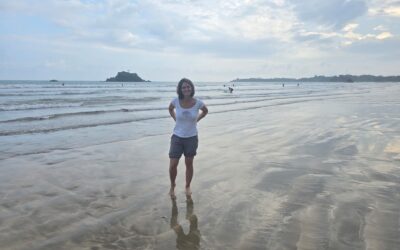
The Blue Pharmacy: Physics, Physiology, and the Indian Ocean
After weeks of clinical monitoring, hospital corridors, and the heavy weight of an MRI report, I finally reached the edge of the Indian Ocean. I was exhausted, hyper-vigilant, and still reliant on crutches to navigate the Sri Lankan heat. But the moment I left my crutches on the sand and let the water take my weight, I realized I hadn’t just found a beautiful view—I had found a biological sanctuary. This is the science of why the ocean became my most effective clinical intervention.
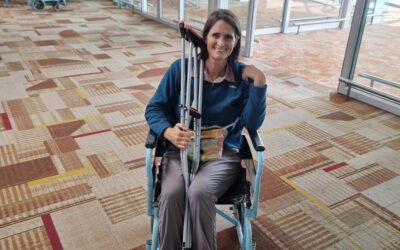
The Paradox of the Expert: Choosing Trust Over Surgery
What happens when the clinician becomes the crisis? Sitting in a wheelchair at Kathmandu airport, staring at a foot that no longer responded to my brain’s commands, I faced the ultimate professional crossroads. I already had the MRI report in my hand—it confirmed global disc bulges and foraminal stenosis at both L4/L5 and L5/S1. My “Physio Brain” saw the structural narrowing, but my “Patient Heart” was calling for a different kind of risk. This is the story of the day I decided to fly toward the ocean instead of the operating theater.
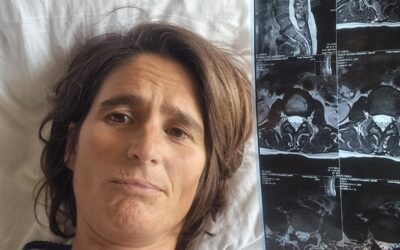
From the summit to the sickbed – when the “thaw” becomes a collapse
Have you been diagnosed with a L4/5 or L5/S1 disc prolapse or disc bulge? Or perhaps, like me, you have this with an acute radiculopathy causing excruciating sciatica and possibly even sensation loss or motor power loss? Read further to hear how I am taking this information and using my clinical knowledge to try and make the best decisions for myself regards the next step.
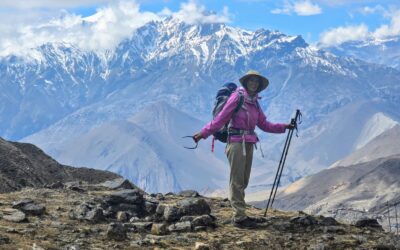
The mountain within: lessons on Pain, Fear & Survival from the Annapurna Circuit
Have you ever wondered if there might be some underlying “hidden” emotions driving your physical pain? Read on to learn more about psychoneuroimmunology – the science of the mind-body connection- and how I worked with it personally.
Why Does My Child’s Stomach Always Hurt? Understanding the Brain-Gut Connection
Is your child suffering from unexplained abdominal pain? Learn how nervous system dysregulation and the brain-gut connection might be the cause, and how pediatric physio can help.

Registration Number: PH55586
Get in Touch
(+27) 083 408 8582
tracy@prowse.org
Visit Us
Mondays - Fridays: Online Consultations
Mondays, Wednesdays, Fridays: The Gatehouse, 91 Brommersvlei Rd, Constantia, Cape Town, 7806
Saturdays: 6 Krige Street, Stellenbosch, 7600
Open Hours
Mon., Wed. & Fri.: 9:00 - 18:00 (Constantia)
Sat.: 9:00 - 17:00 (Stellenbosch)